
01
Model
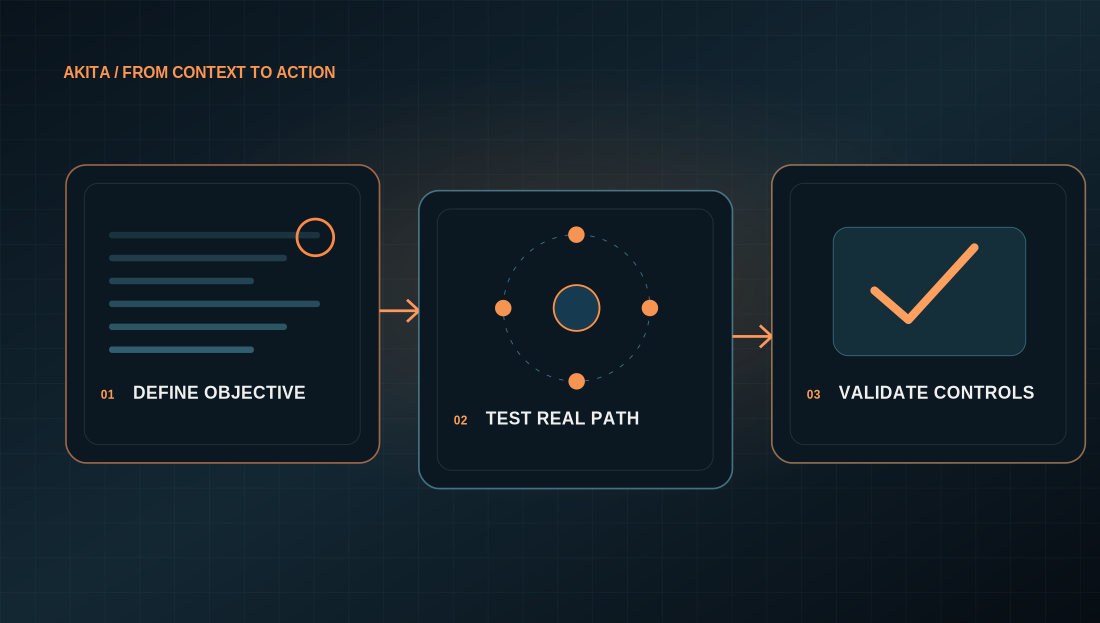
Agree crown-jewel objectives, attacker assumptions, rules of engagement and safety boundaries.
Adversary-led simulations that test whether the organisation can withstand a determined attacker.

Controlled adversarial exercises link entry points, identities and defences to the organisation’s critical objectives.
Tell us the objective, your environment and the decisions you need to make. We will help define a focused engagement.
 AKITA / TESTED, NOT ASSUMED
A defined objective, a safely executed adversarial path and clear evidence for technical and business decisions.
Agree crown-jewel objectives, attacker assumptions, rules of engagement and safety boundaries.
Progress through realistic attack paths while preserving evidence and operational safety.
Reconstruct the attack chain, identify failed assumptions and convert lessons into action.
Penetration testing validates defined systems; Red Team evaluates connected attacker objectives across the wider environment.
Yes. Rules of engagement define boundaries, exclusions, escalation paths and stop conditions.
Yes. Technical evidence is translated into decision-ready lessons and improvement priorities.
Validation in practice
Explore how attack-path testing can focus remediation on the risks that matter.Already have an adversarial validation requirement or draft scope? Send it to Akita for a focused scoping conversation.
Request a scope or proposal ↗